
 Prosenjit Datta
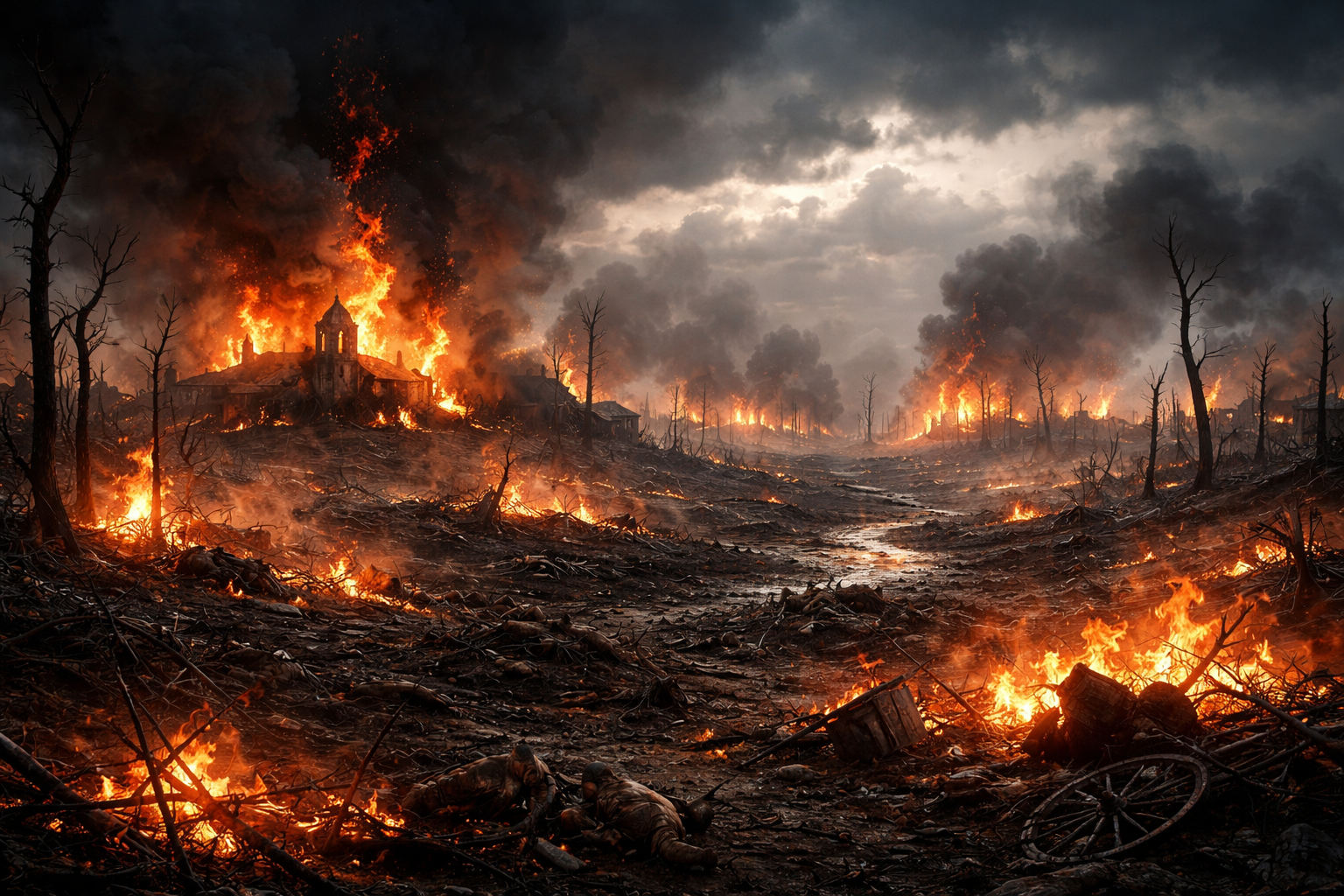 It is not clear how the term “scorched earth strategy” came about. Some point to war reporting by journalists who started using the phrase to describe the tactics of a certain US General in World War 2. Others say it is the English translation of the Chinese phrase jiaoutu zhengce – literally scorched earth policy – that was used to describe Chinese tactics during the second Sino-Japanese war.
What is generally accepted today is that Scorched Earth strategy involves an army or people willing to destroy anything that can be used by the enemy’s armies, including natural resources, water sources and food and that it has been in use since ancient times. The Scythians employed it against Darius the Great of Persia, and the Gauls against Ancient Romans. And multiple other armies – both marauding forces as well as defending armies from time to time. It has been used both as offensive as well as defensive tactics by armies throughout history though the 1977 Geneva Convention sought to ban the destruction of natural resources. But then, of late, the Geneva Convention has become rather old-fashioned and far too many modern wars do not pay attention to the do’s and don’ts of the Geneva Convention.
The US and Israel’s attack – or pre-emptive strikes as they like to call it – on Iran has seen both the attackers (US and Israel) as well as the defender (Iran) employ scorched earth tactics. The US and Israel have bombed not just military facilities of Iran, but also destroyed hospitals (including Tehran’s Gandhi Hospital, named after our Mahatma Gandhi), research laboratories, universities, a school for young girls (and killed over 170 primary school girls in that attack) and even a water desalination plant.
If the attacks were meant to cow down the Iranian regime (especially after the top leaders had been killed in various bombing and missile attacks), it seems to have spectacularly backfired.
Iran is now following its own version of the scorched-earth policy. Apart from destroying oil and other facilities of neighbours – UAE, Kuwait, Qatar and even Saudi Arabia – it has closed the Hormuz Straits, which is key to oil and other goods transportation by ships from West Asian countries and is threatening also to hit desalination plants of neighbours – that are a key to their drinking water supplies. They have also threatened that if the US tries to open up the Hormuz Straits without ending the war, Iran will ensure the Strait is unusable.
Israel and the US have threatened to destroy or capture Kharg Island, crucial to Iran’s energy supplies, and also bomb the nuclear fuel that Iran has.
It is not quite clear whether the US and the Israeli leadership have actually understood the full implications of this sort of attack. If Israel bombs the nuclear fuel stores of Iran (these are nuclear stores for energy generation, as per all reports, and not for building nuclear bombs and missiles), the seas of the Persian Gulf will definitely be affected by radioactivity. This, in turn, would mean that the UAE or Qatar would not be able to use their desalination plants, and would lead to citizens in those nations going without drinking water.
Even if they do not actually bomb the nuclear fuel storage areas, Iran could quite possibly – as a last-ditch effort – mine the entire Hormuz Strait and render it useless for any shipping for years. They could also destroy the water desalination facilities of neighbours in the Gulf as well as their oil and gas production facilities, ensuring that the world sees an oil shortage and economic crisis for at least half a decade, if not more.
The scorched earth policy – as its name explains – leaves a scorched earth. One that is no good to anyone for a long, long time.


Add comment